
The be-back that never comes back
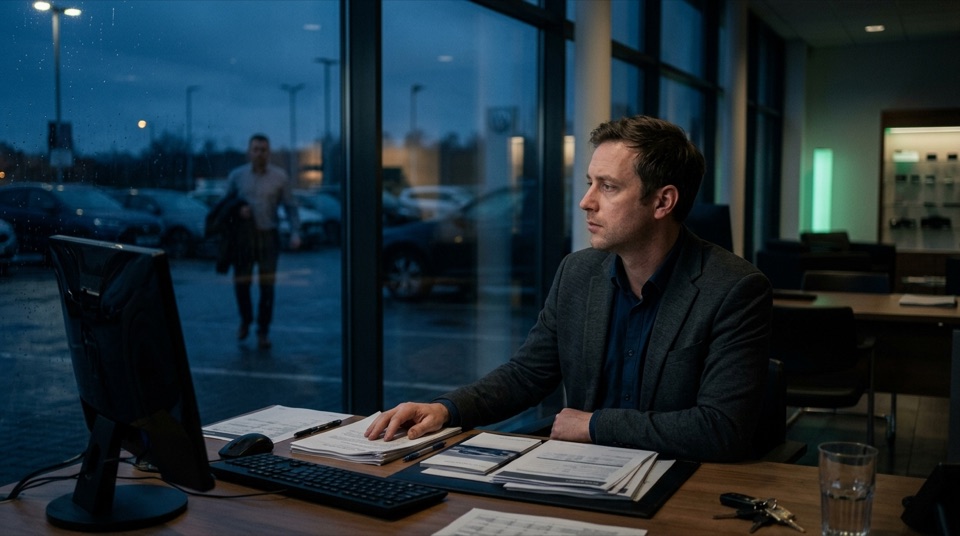
Saturday afternoon. A couple spends ninety minutes on your lot. They drive the car. They sit at the desk. The numbers come out. Then one of them says the sentence every rep dreads: "We need to think about it." The rep says sure, hands over a card, and watches them pull out. On Monday the customer buys the same model, in the same color, from the dealer across the street.
Every sales manager knows the be-back rarely returns, and most treat that as weather. It is not weather. The customer was ready to buy a car; they bought one within 48 hours. What they were not ready for was your rep's answer to their hesitation, and what they never received was a follow-up worth responding to. The deal was on your lot. The training was not.
Count it once. Take last month's be-backs, subtract the ones who returned, and multiply the rest by your average gross. That is the training budget you already spent, on the store across the street.
The walkaround decides the desk
The be-back is born on the lot, an hour before anyone says the words. A rep who does a weak walkaround, points at features, and heads for the test drive has not learned why this family is buying a car. So when the desk shows a payment, there is nothing to weigh it against. The customer sees a number and no reason, and "we need to think about it" is the polite way out.
Train the walkaround as discovery, not a features tour. What are they driving now and what do they hate about it. Who rides in the back. What happened that made today the day. A rep who knows the old car's transmission is slipping and the daughter starts driving in the spring presents a very different car at the desk than a rep who knows the trim level.
Write your walkaround down as steps with the questions you want asked, and score real conversations against it. In Revenue OS, the Intel Suite records and transcribes real customer conversations from the rep's phone with consent and scores them against six skills plus your own process at 60% weight, with the best and worst moment timestamped. You will see the rep who skipped discovery at minute four and lost the deal at minute fifty, and so will he.
"I need to think about it" is not an objection, it is a signal
When a customer says they need to think about it, they are telling the rep that something is unresolved and they would rather leave than say what it is. Payment. Trade value. The spouse who is not in the room. A car they saw online at another store. The rep who says "no problem, here is my card" has agreed to let them solve it somewhere else.
The trained response is short and calm. Agree that it is a big decision. Ask what specifically they want to think through. Listen. Then address the one thing they name, and only that thing. If it is payment, go back to the desk with a different structure. If it is the spouse, offer to bring the car to the house tonight. If it is a competitor's listing, pull it up together and compare. Then ask again. Most be-backs are one unresolved question away from a delivery.
That response has to be rehearsed before it is needed. Drill it daily. In Revenue OS, reps practice against an AI customer by text or live voice, with 5 personas plus custom personas built on your buyers and 3 difficulty levels, scored in about 60 seconds on script adherence, objection handling, close attempt, energy and tone, and follow-up setup. 70 clears. Three under 60 in a row open a manager enforcement action.
- Agree that it is a big decision
- Ask what specifically they want to think through
- Address the one thing they name, nothing else
- Ask for the deal again
- If they still leave, book the next contact before they reach the car
Follow-up texts that say nothing
Open your CRM and read the last twenty follow-up texts your floor sent. Most say some version of "Hey, just checking in, any thoughts on the Tahoe?" That message gives the customer nothing to respond to and every reason to ignore it. The store across the street sent the same one.
A follow-up should carry something: an answer to the question they left with, a payment structure that was not on the table Saturday, a photo of the exact car with the accessory they asked about, an update on their trade value. It should reference what they said on the lot, which is only possible if the rep did discovery. And it should ask for one small, specific next step, not "let me know."
The rep who leaves the desk without a scheduled next contact has already lost most be-backs. 80% of sales are made between the 5th and 12th follow-up attempt, and 48% of salespeople never follow up at all (from the Million Dollar Follow-Up course). Before the customer reaches their car, the rep should know when the next call happens and what it will say. For a stalled deal, the Deal Helper in Revenue OS takes a description of the deal and returns three named follow-up plays with exact words and the reason each works, with outcomes logged per rep.
The manager who only hears about the deals that closed
A desk manager sees every deal that gets to the desk and every deal that spots. What the manager never hears is the walkaround that went wrong, the discovery that did not happen, or the exact words the rep used when the customer said they needed to think about it. The rep reports the be-back in one line at the save-a-deal meeting: "They are going to think about it, they will be back." The manager nods. Nobody knows what actually happened.
Sales managers in every industry coach less than they think. 73% of sales managers spend under 30 minutes a week coaching a rep (ATD 2025, Gong 2025). On a car lot that 30 minutes usually goes to the deal that is on the desk right now, because that deal is visible.
Make the be-back visible. Recorded and scored conversations show the manager the moment the deal was lost without listening to two hours of audio. A call under 80 becomes a redo due 6pm the next business day against an AI customer seeded with the real customer's words, so the rep practices the exact hesitation that walked out the door. The manager gets a coaching queue sorted by urgency instead of a save-a-deal meeting built on the rep's version of events.
A 90-day plan for a dealership sales floor
Month one: objections. One 20-minute lesson per rep per weekday on a single objection, followed by role play on that objection, scored. "We need to think about it." "The payment is too high." "Your trade number is low." "The other store has it for less." Real conversations are recorded with consent and scored against your walkaround and desk process from day one, so you see who is doing discovery and who is giving tours. The Sales Academy in Revenue OS runs this as a 90-day plan with a workbook and quiz after every lesson and a certification per course.
Month two: follow-up. Reps learn a follow-up sequence, the exact words for each touch, and how to write a text that carries information instead of a greeting. Role play shifts to the second and third conversation, the phone call two days after the visit, the customer who says they bought elsewhere. Every be-back on the board gets a scheduled next touch and the manager can see whether it went out.
Month three: ticket and pricing. Presenting payment without apologizing. Holding gross when the customer names a competitor's number. Presenting protection products as part of the recommendation, not a pitch in the F&I office. Across all 90 days, one nightly Compliance Score per rep shows who completed the lesson, practiced, held the process on real customers, and finished redos. Post it where the floor can see it. By day 90 the be-back is no longer a shrug; it is a scheduled appointment.
The short version
- The be-back who never returns bought a car within days, from the rep who handled hesitation better and followed up with something real.
- The be-back is born in a weak walkaround; train discovery so every objection at the desk has something to be weighed against.
- "I need to think about it" is a signal to ask what specifically, address that one thing, and ask again, then book the next contact before they leave.
- Make lost conversations visible to the manager with scored calls, and run a 90-day loop with a nightly score per rep.
Questions owners ask
How should a car salesperson respond to "I need to think about it"?⌄
Agree that it is a big decision, then ask what specifically they want to think through. Listen for the one unresolved item, usually payment, trade, a spouse, or a competitor's listing, and address only that. Ask for the deal again. If they still leave, schedule the next contact before they reach their car. Rehearse this daily so it is calm and automatic.
What should a follow-up text to a be-back say?⌄
Something the customer can act on: an answer to the question they left with, a new payment structure, a photo of the exact car with the option they wanted, or an update on their trade. Reference what they said on the lot and ask for one small next step. "Just checking in" gives them nothing to respond to.
How can a sales manager coach be-backs they never saw?⌄
Record and score the conversations. A scored conversation shows the manager the moment the deal was lost, timestamped, without listening to the full recording. Weak conversations become a redo against a simulated customer using the real customer's words, and the manager works from a queue sorted by urgency instead of the rep's summary at the save-a-deal meeting.
See how the system runs in Car Sales.
Revenue OS for Car SalesYour best month ever, and the plan to beat it.
Break Your Revenue Record