
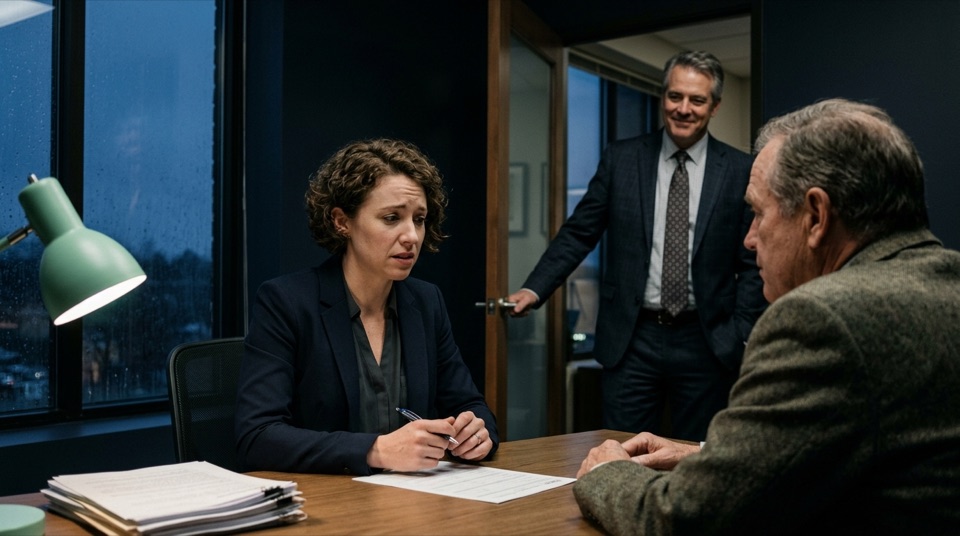
The best processor you ever had is now your weakest closer
It made sense at the time. Your top processor knew guidelines cold, never missed a condition, and borrowers loved her. Producers kept leaving, so you moved her to origination. Eighteen months later she is your most accurate loan officer and your lowest producer. Her files never fall apart. There just are not many of them. Advisory practices see the same thing with the client service associate who became an advisor: flawless paperwork, thin book.
The pattern is consistent. Operations people were rewarded for years for being right, thorough, and careful. Every one of those habits is an asset in a file and a liability in a consultation. A borrower asks about the rate and the former processor explains how rates work. A prospect says they want to think about it and the former associate says of course, take your time. Nobody is ever pushed, nobody is ever asked, and nobody is ever closed.
You have probably tried to fix this with more knowledge. More product training, more market updates, a sales book. It did not work because knowledge was never the gap.
What they have and what they are missing
Start by naming what the operations background gives you, because it is real. These producers understand the file from the inside, so they set accurate expectations and rarely lose a deal in underwriting. They are trusted, because they do not oversell. They are disciplined, because they lived on checklists. Any one of those would take a year to build in a producer hired off the street.
Now name what is missing, specifically. They do not ask discovery questions before presenting, because in operations the questions were already answered on the application. They answer objections with facts instead of questions, because in operations a question had one correct answer. They do not ask for the decision, because in operations the decision had already been made by someone else. They do not schedule the next conversation, because in operations the next step was a system status, not a call.
Each of those is a conversational habit, not a knowledge gap. Conversational habits are built the same way for everyone: by saying the words out loud, under mild pressure, many times, and being told what to change.
- Ask before presenting
- Answer objections with a question, not a fact
- Ask for the decision
- Schedule the next conversation before ending this one
Train the conversation, not the product
Give the former operations producer a short, specific process for the consultation and hold them to it. Discovery first: timeline, situation, what happened last time, who else is involved. Present the recommendation inside what the client said, not as a rate sheet. Handle the objection with a question before offering any information. Ask for the decision in plain words. Book the next call before hanging up. Five steps, written in your words, on one page.
Operations people respond well to a process, because a process is a checklist and checklists are how they think. What they need is permission to run it. Say explicitly that asking for the decision is not pushy, it is the job, and that a borrower who says no after being asked is better than a borrower who drifts away without ever being asked. Say it more than once.
The Sales Academy in Revenue OS gives this a structure: Jordan Stupar's method as a 90-day plan, 7 courses and 140 lessons, one 20-minute lesson per weekday with a workbook and quiz after each, and a certification per course. Month one is objections, which is exactly where the operations habit of answering with facts does the most damage.
Practice is where the habit actually changes
A former processor will read the process, agree with it, and then on the next live call explain how rates work when the borrower says the rate is high. Not from stubbornness. From a decade of practice doing it that way. The only thing that overwrites a rehearsed habit is a more rehearsed habit, and that means saying the new words out loud far more times than seems reasonable.
Customer AI & Role Play makes that possible without burning a single lead. The producer runs the consultation against an AI borrower by text or live voice, 5 personas plus custom at 3 difficulty levels, and gets a score in about 60 seconds on five criteria at 20 points each: script adherence, objection handling, close attempt, energy and tone, and follow-up setup. For a former operations producer, close attempt is the number to watch. It will start low. The coach's note will say the same thing for a week: you never asked. Then one morning it will not, and that is the day the habit changed. A 70 clears. Three scores under 60 in a row open a manager enforcement action, which keeps the practice from being skipped on busy days.
Checking the real consultation
Practice scores tell you the producer can ask for the decision. Only the real call tells you whether they did. When consultations are recorded with consent and scored on six skills plus your own process at 60% weight, close timing and objection handling are visible per call, and the worst moment is timestamped. For a former operations producer, that timestamp will land on the same kind of moment over and over: the borrower objected, the producer explained. You can hear it in ninety seconds, and so can they.
A consultation under 80 becomes a redo due 6pm the next business day against an AI borrower seeded with the real borrower's words. The producer re-runs the exact moment where they explained instead of asked, and this time asks. That is how a careful, accurate, trusted operations person becomes a careful, accurate, trusted producer who also closes. It takes about ninety days of daily work, and it is worth more than another hire.
The short version
- Producers from operations know the product and lack the conversation. More product training will not fix a conversational gap.
- Name the four missing habits: ask before presenting, answer objections with a question, ask for the decision, book the next call.
- Give them a written five-step consultation process and explicit permission to ask for the decision.
- Overwrite the old habit with daily scored practice, then check the real calls for the moment where they explained instead of asked.
Questions owners ask
Can a former loan processor become a strong loan officer?⌄
Yes, and often a very good one, because they set accurate expectations and clients trust them. The gap is conversational, not technical. They need a written consultation process, explicit permission to ask for the decision, and daily scored practice on objections and the close until asking becomes as automatic as checking a guideline.
What is the biggest habit to fix in producers who came from operations?⌄
Answering objections with information instead of a question. In operations, a question had one correct answer. In a consultation, an objection is a signal to ask what the client is really deciding on. Closely behind it is never asking for the decision, because in operations the decision had always been made by someone else.
How long does it take to retrain an operations person for sales?⌄
Plan on about 90 days of daily work: a short lesson, scored practice against a simulated client, and real consultations reviewed for the specific moments where the old habit shows up. The product knowledge is already there, so all of the time goes into the conversation. Progress shows up first in the practice scores, then in the real calls.
See how the system runs in Finance.
Revenue OS for FinanceYour best month ever, and the plan to beat it.
Break Your Revenue Record