
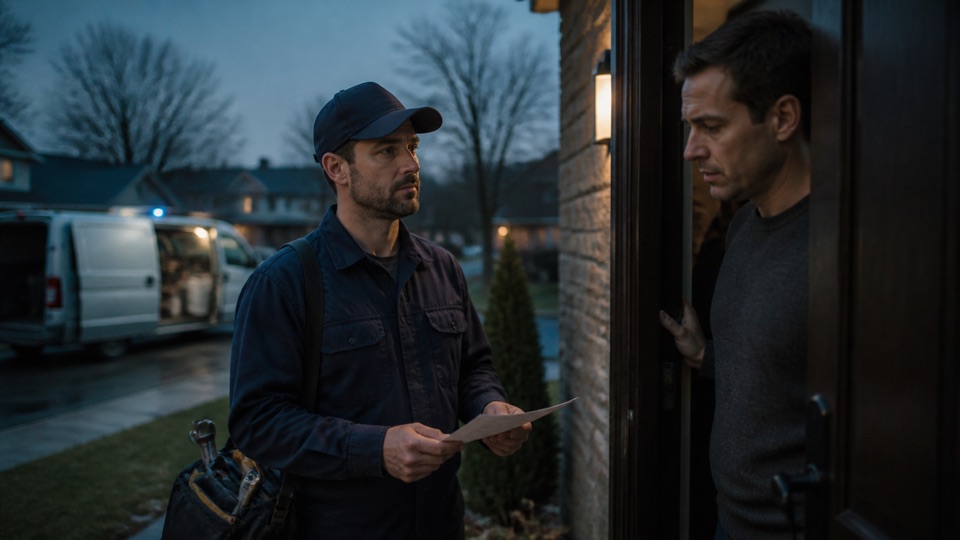
"Let me think about it" is where the job goes quiet
Listen to the end of an unsold call and you will hear the same exchange almost every time. The homeowner says they need to talk to their spouse or think it over. The tech says that makes sense, hands over the estimate, and heads for the van. It is polite, it is friendly, and it is the moment the job stops being yours.
The tech does not hear it as a loss. They hear it as a maybe. But a maybe with no date attached is a no that has not been said out loud yet. The customer is not going to call you back to say they decided against it, and most of them are not going to call you back to say yes either. They are going to wait until somebody else asks.
What the folder of open estimates is costing you
Open the list of estimates your techs wrote in the last 90 days and did not close. Most owners have never looked at that list as one number. The big tickets are disproportionately in it, because the larger the job, the more likely the homeowner wants time. Repipes, water heater replacements, sewer lines: the work that moves your average ticket is exactly the work that leaves the house unsold.
Every one of those estimates already cost you a lead, a truck roll and an hour of a tech's day. The customer has met your plumber, trusts the diagnosis and knows the price. That is the warmest prospect you will ever have, and in most shops nobody calls them.
- No follow-up date agreed before the tech left
- The real hesitation never asked about or written down
- Only one option presented, so "think about it" was the only exit
- Follow-up left to the office with no notes from the call
Why a CRM reminder does not save the job
The usual fix is a task in the software: call back in three days. The office makes the call, gets voicemail, leaves a message, and marks it done. The reminder fired. The job is still dead, because the follow-up was never set up on the call. The customer never agreed to it, and the person calling does not know what the customer was worried about.
Follow-up is a selling skill, not an admin task, and it is decided in the kitchen. A tech who asks what specifically the homeowner wants to think over, and books a time to talk about exactly that, has a follow-up worth making. 84% of what reps learn in training is gone within 90 days (Sales Performance International), so telling techs this at a meeting will not make it stick.
Rehearse the last two minutes of the call
The skill is short: when the customer says they need to think about it, ask what part they want to think over, answer what can be answered now, and agree on a specific time to talk again before leaving. Most techs have never practiced that exchange once, so in the moment they default to the polite exit.
Customer AI & Role Play gives them somewhere to practice it, against an AI homeowner by text or live voice, across 5 personas plus custom and 3 difficulty levels. Every attempt is scored in about 60 seconds on five criteria, script adherence, objection handling, close attempt, energy and tone, and follow-up setup, 20 points each, with a coach's note. A 70 clears. Follow-up setup is scored on every rep, so the habit gets built on purpose.
Then see which techs leave with a next step
Intel Suite records, transcribes and scores real service calls against six skills, follow-up setup among them, and syncs the result so the score lives with the job. Your own process carries 60% of the weight, so if your standard is that every unsold estimate leaves with a named concern and a booked time to talk, a call that ended with "no problem, give us a call" scores lower and you can see which tech it was.
A call under 80 becomes a redo due 6pm the next business day, re-fought against an AI customer seeded with the real homeowner's actual words. The tech rehearses the exact "let me think about it" they let walk out the door, while the estimate is still open.
One number for who keeps jobs alive
The Compliance Score is one number per tech, 0 to 100, recalculated nightly: training completion 30%, daily tasks 25%, role play quality 25%, manager enforcement 20%. The dashboard ranks the team, sorts a coaching queue by urgency, and shows the objections your techs lose most, so you know whether "think about it" is costing you more than price.
None of this asks a plumber to chase anyone. It asks them to end the call with a next step the customer agreed to. The estimate is already written. The trust is already earned. This is about making sure the job does not quietly leave with the van.
The short version
- Unsold estimates die because nobody owns the next step, not because the customer said no.
- The biggest tickets are the ones most likely to leave unsold, so the open-estimate folder is where your average ticket hides.
- A CRM reminder cannot rescue a follow-up that was never set up on the call.
- Teach techs to ask what the customer wants to think over and book a time before they leave.
- Score follow-up setup on real calls so you can see which techs keep jobs alive.
Questions owners ask
Who should follow up on an unsold plumbing estimate, the tech or the office?⌄
Either can make the call, but the tech has to set it up. The tech is the one who knows what the homeowner was unsure about and the one the customer agreed to talk to again. If the office follows up, it should be with the tech's notes on the specific concern, not a generic checking in.
How soon should a plumbing company follow up on an estimate?⌄
At the time the customer agreed to on the call. That is the whole point of setting it in the kitchen. A follow-up the homeowner expects is a conversation. One they did not expect is a sales call, and it gets treated like one.
How do I know which techs are letting estimates go cold?⌄
Compare unsold estimates against booked follow-ups, per tech, over 30 days. Scoring the calls adds the part your software cannot show you: whether the tech asked what the hesitation was and whether the customer agreed to a next step, or the call just ended politely.
See how the system runs in Plumbing.
Revenue OS for PlumbingYour best month ever, and the plan to beat it.
Break Your Revenue Record