
The number that makes the customer stand up
The deal was going fine. The customer liked the truck, drove it, sat down. The salesperson went to the desk and came back with a worksheet. The customer skipped the payment, skipped the price, and went straight to the trade line. Then the face changed. "That is way less than what it is worth. The website said more than that." The salesperson said the used car manager looked at it and that is the number. The customer said, "Then we are done here," and stood up.
Nothing about the truck changed. Nothing about the payment changed. The customer left over a number they saw for the first time on a worksheet, with no story behind it, from a salesperson who had never looked at their car with them. That deal was not lost at the desk. It was lost on the lot, when the trade was handed to an appraiser and nobody talked to the customer about it.
Why the trade number lands like an insult
To the customer, the trade is not inventory. It is their car. They know what they paid for it. They have an online estimate on their phone, and that estimate was built to be high, because the site wants the lead. They have not looked at the tires in a year. They do not think about the door ding, the check engine light they cleared last week, or the miles. Then a stranger tells them, on paper, that the car they drove in is worth less than they believed.
Your salesperson made it worse without trying. The keys went to the appraiser while the customer sat with coffee. Nobody asked what they thought the car was worth. Nobody walked it with them. So the number arrived cold, with nothing to stand on, and the salesperson's only defense was, "That is what the used car manager said." That sentence tells the customer the salesperson is not on their side and cannot explain the number. Both things are true, and the customer knows it.
The desk cannot fix this. The appraiser priced the car correctly. The problem is that the customer was never brought along, so the correct number feels like an attack.
Walk the trade with the customer before anyone prices it
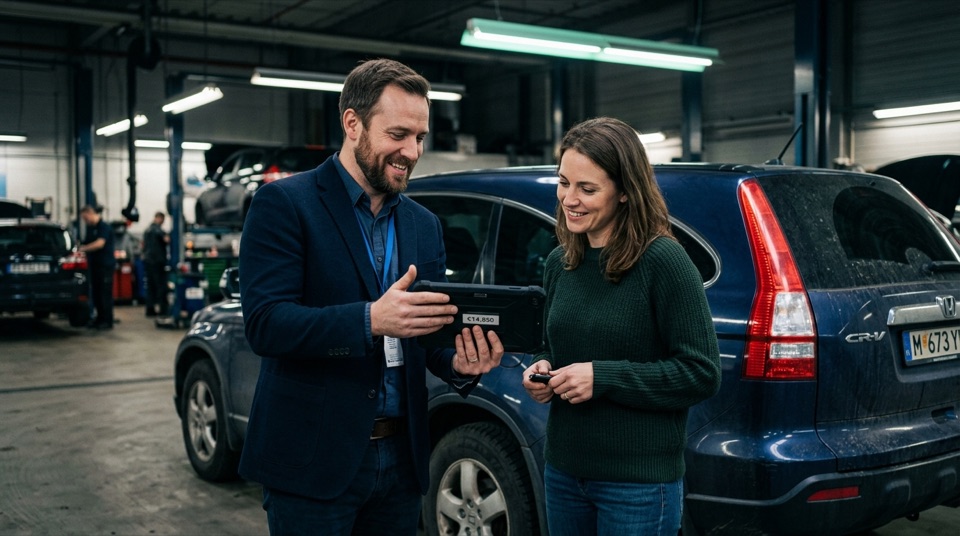
The fix happens before the appraisal, in about five minutes, and most salespeople skip it because nobody can see them skip it. The salesperson walks the trade with the customer. Not around it. With them. They touch the tires. They open the doors and look at the seats. They ask when the brakes were done and whether there are service records. They ask what the car has been doing lately that the customer is tired of.
Then the question that decides the deal: "What were you hoping to get for it, and where did that number come from?" The answer tells the salesperson the gap before the desk does, and it lets the salesperson set the expectation while standing at the car. "Those sites give a range, and the top of it assumes new tires and no wear. Let me get you a real number, and let me show you how they got to it." The customer has now heard that the number will be lower than the website, from someone who looked at the car with them, before the worksheet exists.
This is the road to the sale doing its job. A salesperson who does the trade walk brings information back to the desk, and the desk gets a customer who already understands their car has miles on it.
- Walk the trade with the customer, not for them
- Ask what they were hoping for and where the figure came from
- Set the expectation at the car, before the appraisal
- Bring what you learned to the desk
Presenting the number so it holds
At the desk, the trade number is never presented alone. It comes after the salesperson restates what they walked together: the tires, the miles, the reconditioning the store will do before it can sell the car. Then the number, and then immediately the deal it makes possible. The customer is buying a difference, not selling a car. The conversation stays on the truck they came for.
When the customer objects anyway, and they often will, the trained response is a question, not a trip to the desk and not an argument with the website. "Is it the number itself, or the gap between this and what you were hoping for?" If it is the gap, the salesperson goes back to the walk. If it is the number, the salesperson can offer to have the appraiser explain it, or look at whether a different structure gets the customer where they need to be. Only now does the desk get involved, and now the desk knows what it is solving.
The words vary by store. The structure does not. Walk, expect, present with the story, ask before you fight. A salesperson who has run that structure fifty times out loud runs it with a real customer. One who heard it in a Saturday meeting says, "That is what the used car manager said."
Train it before a real trade is on the line
Your salespeople have heard all of this. 84% of what reps learn in training is gone within 90 days (Sales Performance International). The customer's reaction to a low trade number has been rehearsed on every salesperson they ever met. Your salesperson's response was rehearsed once, in a conference room, with nobody's car in the parking lot.
The trade conversation has to be practiced against a customer who pushes back and reacts to tone. In Revenue OS the salesperson runs it against an AI customer by text or live voice, picking from 5 personas plus custom at 3 difficulty levels. The easy one accepts the walk. The hard one has a printout from the website and a brother-in-law who sells cars. Each run is scored in about 60 seconds on script adherence, objection handling, close attempt, energy and tone, and follow-up setup, 20 points each, with a coach's note. A 70 clears. Three under 60 in a row open a manager enforcement action.
This belongs in month three of the training plan, ticket and pricing, alongside the payment objection and the price presentation, because it is the same skill: presenting a number with a story so it holds. One 20-minute lesson per weekday, workbook and quiz after each, and the role play on that day's lesson. By the end of the month the trade walk is a habit instead of a memory.
Hear the trade conversation on real deals
Practice proves the salesperson can do it. Only the real conversation proves they did. When floor conversations are recorded with the customer's consent and scored, the trade walk either happened or it did not, and the moment the customer saw the number is timestamped along with what the salesperson said next. Price presentation is one of six scored skills, with your own road to the sale weighted at 60%, so if your process says the trade walk comes before the keys go to the appraiser, that is what the score measures.
In Revenue OS a conversation under 80 becomes a redo due 6pm the next business day, against an AI customer seeded with the real customer's words. The salesperson who said "That is what the used car manager said" on Saturday hears the same customer Monday and runs the walk instead. For the deal that already stood up, the Deal Helper takes a description of it and returns three named follow-up plays with exact words and why each works, so the call back is about the customer's car and not "Just checking in."
Toyota of Katy runs the system. The trade number is not going to get higher. The customer's reaction to it can change, and that starts with a salesperson who looked at the car with them. Keeping those customers in the chair is how you break your revenue record on the trades already rolling onto your lot.
The short version
- The trade number loses deals because it arrives cold, on paper, from a salesperson who never looked at the car with the customer.
- Walk the trade with the customer, ask what they were hoping for and where the figure came from, and set the expectation at the car before the appraisal.
- Present the number with the story behind it and move straight to the deal it makes possible; ask a question before fighting the website.
- Drill the trade conversation daily against a customer who pushes back, then score real floor conversations so a skipped trade walk shows up on the specific deal.
Questions owners ask
What do you say when a customer says the trade offer is too low?⌄
Ask before you argue. "Is it the number itself, or the gap between this and what you were hoping for?" If it is the gap, go back to what you walked together: tires, miles, reconditioning. If it is the number, offer to have the appraiser walk them through it. Never argue with the website. Agree that it gave a range and explain what the top of the range assumes.
Should the salesperson tell the customer the trade number before the desk does?⌄
The salesperson should set the expectation before the number exists, at the car, by asking what the customer hoped for and explaining what online estimates assume. The actual figure still comes from the desk on the worksheet. The difference is that the customer has already heard, from someone who looked at their car, that the real number will be below the website.
How do I know if my salespeople are doing the trade walk?⌄
Not from the worksheet and not from asking them. Record floor conversations with consent and score them against your road to the sale with the trade walk as a required step. A skipped walk shows up as a missing step on the specific deal, timestamped. Pair that with daily role play scores on the trade conversation so you see who can run it and who does.
See how the system runs in Car Sales.
Revenue OS for Car SalesYour best month ever, and the plan to beat it.
Break Your Revenue Record