
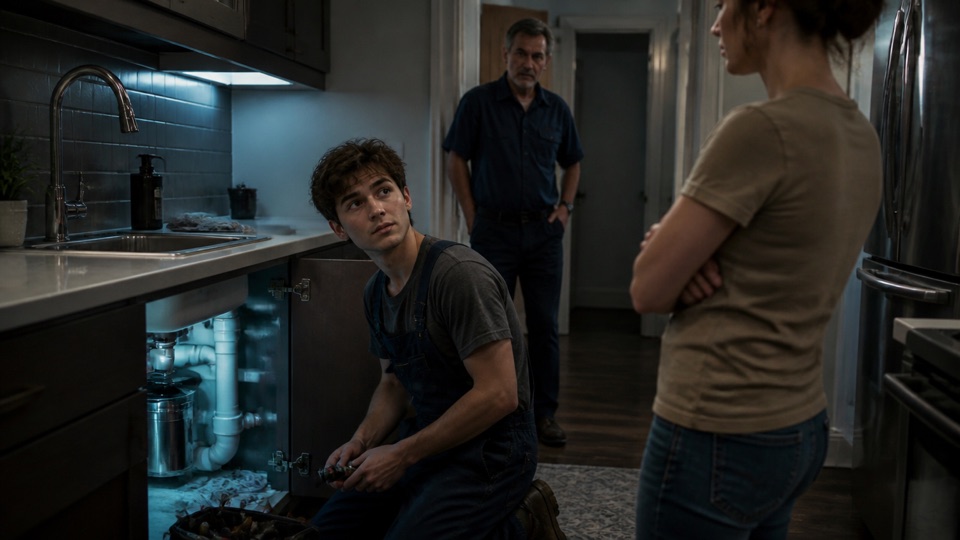
They can fix it, they just cannot explain it
Watch a new tech's first solo calls. The diagnosis is usually fine. Then the homeowner asks what it will cost or whether it is worth fixing, and the tech goes quiet, mumbles a number, or apologizes for the price. They offer one option because one option is less to explain. They skip the water heater because asking about it feels pushy. The repair gets done, and everything around the repair gets left on the table.
None of this is a talent problem. Nobody taught them what to say. They learned to solder through hundreds of repetitions. They are learning to present options in front of paying customers with zero.
Ride-alongs teach whatever the senior tech does
The ride-along is the default training program in most plumbing companies, and it has one big flaw: it copies. If your senior tech presents two options and recommends one, the new hire may learn that. If your senior tech discounts into silence and skips the inspection, the new hire learns that instead, and now you have two techs doing it.
It also does not scale. Your best tech cannot ride with every new hire and run their own calls. 73% of sales managers spend under 30 minutes a week coaching a rep (ATD 2025, Gong 2025), and a service manager in a busy plumbing shop is usually below that, not above it.
- One option presented because it is easier to explain
- Price given with an apology or a discount attached
- No whole-home inspection on the first solo calls
- Membership never mentioned, or mentioned before the diagnosis
Teach the conversation as a curriculum, not a vibe
The customer conversation on a plumbing call is a short, repeatable set of steps: diagnose, present two options, recommend one, give the price, ask for a decision, walk the house, offer the membership after the diagnosis. That can be taught in order, the same way you would teach code or fittings.
Sales Academy delivers it as one 20-minute lesson per weekday, with a workbook and quiz after each, and month one is objections. A new tech gets the words in small pieces they can use the next morning, instead of a three-day onboarding binder they will never open again. 84% of what reps learn in training is gone within 90 days (Sales Performance International), which is why daily beats one big session.
Let them fail where it costs nothing
The first time a new tech hears "that seems like a lot" should not be in a real customer's kitchen. Customer AI & Role Play lets them practice against an AI homeowner by text or live voice, across 5 personas plus custom and 3 difficulty levels.
Every attempt is scored in about 60 seconds on script adherence, objection handling, close attempt, energy and tone, and follow-up setup, 20 points each, with a coach's note. A 70 clears. A new hire who has presented options thirty times to an AI homeowner walks into their first solo call having already had the conversation.
Then see what happens on their real calls
Intel Suite records, transcribes and scores real service calls against six skills and syncs the score to the job. Your own process carries 60% of the weight, so the new tech is measured against how your company runs a call, not a generic sales script. You can see in week two whether they are presenting options, not in month six when the average ticket finally tells you.
A call under 80 becomes a redo due 6pm the next business day, against an AI customer seeded with the real homeowner's words. The new hire fixes the exact moment they fumbled, the next day, instead of repeating it for a quarter.
Know who is ramping without riding along
The Compliance Score is one number per tech, 0 to 100, recalculated nightly: training completion 30%, daily tasks 25%, role play quality 25%, manager enforcement 20%. For a new hire it answers the question you actually need answered early: is this person doing the work to get good. Three role play scores under 60 in a row open a manager enforcement action, so a struggling new tech gets attention before they get comfortable.
You are not trying to turn a new plumber into a salesperson. You are trying to make sure the customer side of the job gets taught on purpose, so the habits they carry for the next ten years are the ones you chose.
The short version
- New techs learn the trade through repetition and the customer conversation by accident.
- Ride-alongs copy the senior tech's habits, good and bad, and they do not scale.
- The plumbing call conversation is a short set of steps that can be taught in order, daily.
- Let new hires practice objections against an AI homeowner before they face a real one.
- Score their real calls from week one so you see the ramp instead of guessing at it.
Questions owners ask
When should a new plumbing tech start learning the customer conversation?⌄
From the first week, alongside the trade work. The habits a tech forms on their first solo calls are the ones they keep. Waiting until they are technically ready means they spend months learning the customer side by accident.
Can a quiet tech learn to present options?⌄
Yes. Presenting two options and recommending one is a script, not a personality. Quiet techs often do it better once they have the words, because they are not tempted to talk past the price. What they need is enough repetitions that the words feel like theirs.
How do I know if a new tech is ramping or struggling?⌄
Look at their call scores and role play scores week over week, not just their tickets. Tickets lag. A new tech who is completing lessons, practicing and scoring higher on real calls is ramping, even if the revenue has not caught up yet.
See how the system runs in Plumbing.
Revenue OS for PlumbingYour best month ever, and the plan to beat it.
Break Your Revenue Record