
Fourteen people walked through and your agent left with a sign-in sheet
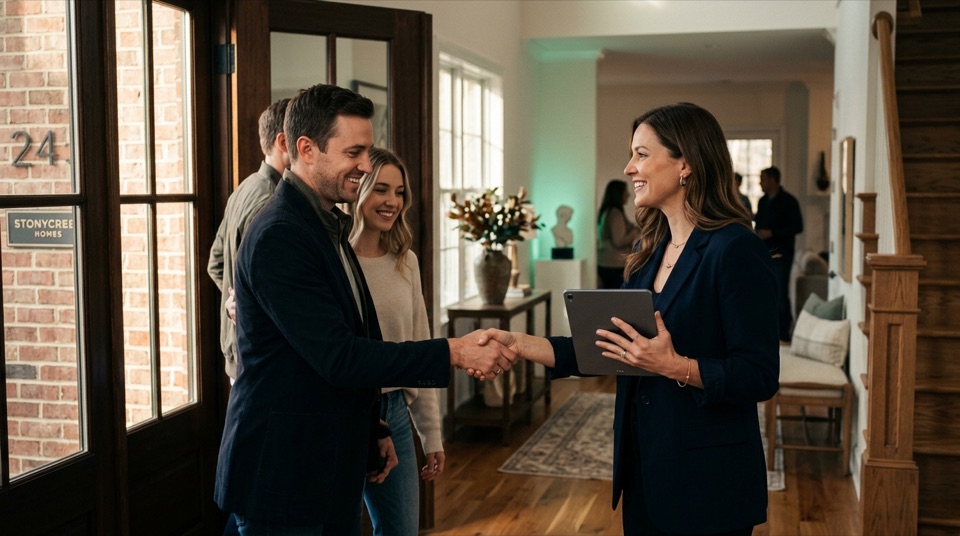
Picture Sunday. Your agent opens the house at one, sets out the flyers, and stands in the kitchen. Couples walk in, say they are just looking, ask about the school district, and leave. A few sign the sheet. Nobody books anything. On Monday the agent sends a blast email to the sheet, gets two bounces and no replies, and calls the open house a success because traffic was good.
Now count what it cost. Four hours of the agent's weekend. Signs, flyers, a portal boost. The seller's goodwill, spent on strangers who were never going to buy that house. Most of those fourteen people are buyers. They gave up a Sunday afternoon to walk through a house. Some are months out, some are weeks out, and some have already been outbid twice and are ready to sign with an agent who asks them a real question. Your agent asked none of them.
The open house is not a showing of one house. It is fourteen first conversations with buyers who came to you. The agent who understands that leaves with two consultations booked. The agent who does not leaves with a sheet.
The sign call is a sale your agent treats as a question
The sign call is the same failure at higher speed. Someone driving by sees your sign, calls the number, and asks how much. Your agent, wanting to be helpful, tells them. The caller says thanks and hangs up. Total time, forty seconds. Total result, nothing. The agent logs it as a sign call and moves on.
That caller is a buyer who is actively looking, in that neighborhood, right now, and who picked up the phone. There is no warmer lead in real estate. What they asked for was a number. What they need is someone to find out what they are actually trying to do, whether that house fits, and if it does not, what does. The agent who asks two questions before answering one turns that call into a consultation. The agent who answers the question turns it into a hang-up.
Then there is what happens after. The open house browser who said they were six months out gets one email. The sign caller who did not book gets no callback. 80% of sales are made between the 5th and 12th follow-up attempt, and 48% of salespeople never follow up at all (from the Million Dollar Follow-Up course). Your agents are generating buyer leads on your dime and dropping them at touch one.
The browser is not the problem. The goal is
Ask your agents what the goal of an open house is and you will hear sell the house, or get exposure for the listing. Ask what the goal of a sign call is and you will hear answer the caller's question. Both are wrong, and the wrong goal produces the wrong behavior. The goal of every open house conversation and every sign call is one thing: a booked buyer consultation, on the calendar, with a time.
Once the goal is right, the conversation reorganizes itself. At the open house, the agent stops describing the countertops and starts asking. How long have you been looking? What have you seen that came close? What happened? Is anyone helping you? On the sign call, the agent answers the price question with a question. Is this the neighborhood you are focused on, or is it one of several? Have you seen inside anything on this street? Then the ask: a twenty-minute conversation, this week, to lay out what you want and how the search should run.
The objections are predictable. "We are just looking." "We already have an agent." "Just text me the price." "We are not ready yet." Every one has a respectful answer that keeps the conversation going and still asks for the meeting. Write the whole thing down as a process: the opener, the three questions, the ask, the four objections, the follow-up plan for anyone who says not now. That written process is what you train, drill, and score against.
Learn: teach the pivot from question to appointment
Most agents were never taught this. They were taught to know the inventory and be friendly. The pivot from answering a question to booking a consultation is a sales skill, and it has to be taught like one, in short pieces, daily, until it is habit.
The Sales Academy in Revenue OS delivers Jordan Stupar's method as a 90-day plan: 7 courses and 140 lessons, one 20-minute lesson per agent per weekday, with a workbook and quiz after each lesson and a certification per course. Month one covers objections, including the just-looking and already-have-an-agent lines your agents hear every Sunday. Month two covers follow-up, which is where the six-months-out browser turns into a client. Month three covers ticket and pricing. An agent can do the lesson from the kitchen before the open house starts.
Practice: the caller who only wants the price
Between the lesson and the real Sunday, the agent needs reps. Customer AI & Role Play gives them a buyer to practice on. The agent runs the sign call or the open house conversation against an AI buyer, by text or live voice, choosing from 5 personas plus a custom one, at 3 difficulty levels. The hardest setting is the caller who wants the price and nothing else and will hang up if the agent stalls.
Each attempt is scored in about 60 seconds on five criteria, 20 points each: script adherence, objection handling, close attempt, energy and tone, and follow-up setup. A coach's note explains the score. A 70 clears. Three scores under 60 in a row open a manager enforcement action. Require every agent hosting an open house that weekend to clear the browser role play by Friday. The agent who can book an AI buyer who says just looking will book the real one.
Implement: hear the sign calls and the kitchen conversations
Practice changes behavior only if the real conversation is heard. Sign calls that ring the agent's phone can be recorded with the caller's consent stated at the start. Open house conversations can be recorded the same way from the agent's phone, with consent, when the agent moves from greeting to consultation. Intel Suite transcribes and scores each one on six skills, including close timing, follow-up setup, and talk-to-listen ratio, plus your brokerage's own open house and sign call process at 60% of the weight. The best and worst moment are timestamped.
A conversation under 80 becomes a redo due 6pm the next business day, run against an AI buyer seeded with that caller's actual words. The agent who let "just text me the price" end the call hears it again tomorrow and has to turn it into a meeting. For the browser who said six months and went quiet, Deal Helper takes a description of the stalled lead and returns three named follow-up plays with exact words and why each works. Outcomes are logged, so the sign-in sheet finally has a second act.
Refine: count consultations booked, not visitors
Your open house report probably counts visitors. Change it. Count consultations booked per open house and per sign call, by agent. Then put a behavior number next to it. Compliance Score gives every agent one number from 0 to 100, recalculated nightly, weighted 30% training completion, 25% daily tasks, 25% role play quality, and 20% manager enforcement. The agent who hosts three open houses a month and books nothing will show a low role play score before the pipeline shows the gap.
The coaching queue sorts the weak conversations by urgency, so a manager with 30 minutes spends them on the agent who let four sign calls end in forty seconds this week. The signs and the Sundays are already paid for. Turning the people they produce into booked consultations is the cheapest pipeline a brokerage will ever build, and it is how a team with the same lead flow starts to break its revenue record.
The short version
- Open house visitors and sign callers are buyers who came to you; the agent who answers a question and stops is leaving consultations on the table.
- Set the goal of every open house conversation and sign call as a booked buyer consultation, then write the process to get there.
- Drill the just-looking and text-me-the-price objections against an AI buyer before the weekend, not after.
- Record the real conversations with consent, score them against your process, and redo the weak ones by the next business day.
- Report consultations booked per open house and per sign call, by agent, alongside a nightly behavior score.
Questions owners ask
What should an agent say when a sign caller only wants the price?⌄
Answer with a question first, then the number if they still want it. Ask whether this is the neighborhood they are focused on and whether they have seen inside anything nearby. Then offer a twenty-minute conversation this week to lay out what they want. The price alone ends the call. Two questions and an ask turn it into a consultation.
How do you get open house visitors to book a buyer consultation?⌄
Stop describing the house and start asking. How long have they been looking, what came close, what happened, and is anyone helping them. Then ask for a short meeting this week rather than a follow-up email. Agents who have rehearsed the just-looking objection against an AI buyer ask for the meeting. Agents who have not hand over a flyer.
Can open house and sign call conversations be recorded and scored?⌄
Yes, with consent stated at the start by the agent, and the brokerage initiates and owns that consent, including in all-party states. Each conversation is scored on six skills plus your own process, with the best and worst moment timestamped. Audio is deleted after 90 days and no voiceprints are created. Confirm your policy with your attorney before the first weekend.
See how the system runs in Real Estate.
Revenue OS for Real EstateYour best month ever, and the plan to beat it.
Break Your Revenue Record