
Your tech found the failure and someone else sold the system
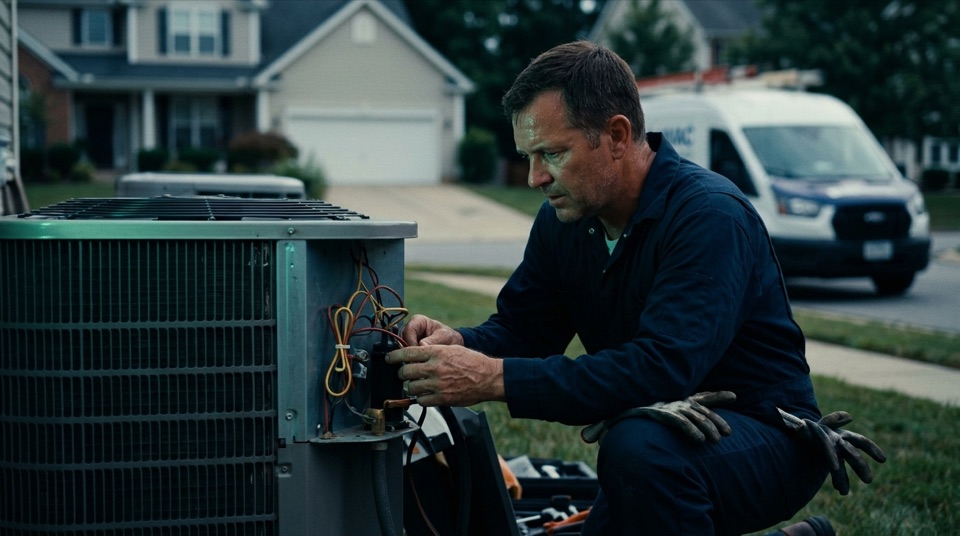
It is July. The system is fourteen years old. Your tech has just told the homeowner the compressor is done. He can patch it or they can replace it. He mentions that a comfort advisor can come out. The homeowner says "let me think about it" and calls two other companies that afternoon. Your comfort advisor arrives two days later to a homeowner who already has a cheaper bid on the counter.
Or the handoff never happens at all. The tech did not want to look like a salesperson, so he quoted the repair, took the check and left. Either way, a full replacement became a repair, or became nothing. The lead was the best one in the trade: a dead system, a hot house, a homeowner who already knows the answer. It still walked.
You see this as a low close rate on replacement leads. That number hides the real problem. The problem is a series of conversations nobody in your company was listening to, so nobody could correct them.
The maintenance base leaks the same way
Your techs are in the home twice a year. The maintenance agreement is the reason they are there. The renewal or the upgrade to a better plan is the easiest sale in your company, because the customer already said yes once and the tech is standing next to the equipment. Most techs never bring it up. They finish the tune-up, hand over the paperwork and go.
Comfort advisors leak on the other end. The proposal that did not close at the kitchen table goes into a folder. 80% of sales are made between the 5th and 12th follow-up attempt, and 48% of salespeople never follow up at all (from the Million Dollar Follow-Up course). Most replacement proposals get one call, if that. The result is a maintenance base that stays flat and a replacement pipeline that leaks while marketing spend grows.
Why training did not fix it
You have paid for training. The ride-along for new techs. The manufacturer sales class for comfort advisors. Maybe an outside trainer at the spring meeting. The problem is not the content. It is that the training happened once and the season did not care.
84% of what reps learn in training is gone within 90 days (Sales Performance International). Only 29% of companies can see whether training changed what their reps do. By the first heat wave your techs were back to quoting the repair and leaving, and your advisors were back to presenting one option and waiting. You could not see it, because the conversation happens in a home you are not in.
That is the gap. Not knowledge. Visibility and repetition. Fix those and the training you already paid for starts to hold.
The four conversations that decide the sale
Write down the four moments where the HVAC sale is won or lost, in order. First, the diagnosis. The tech explains what failed, why repair is a poor bet on a system that age, and what a comfort advisor will do for the homeowner. Second, the handoff itself. The advisor arrives knowing what the tech said and when, ideally the same day. Third, the presentation. Options, a recommendation tied to the house, price with financing on the table, and a request for the decision. Fourth, the follow-up when the answer is not yes.
Each moment has predictable objections. "I just want it fixed." "I need other bids." "That is more than I expected." "Let me talk to my wife." Every one of those is trainable, because every one of those is going to be said again this week. The tech or advisor who has said the answer out loud fifty times will not improvise it in the home.
- Diagnosis: what failed, why repair is a poor bet, what the advisor will do
- Handoff: advisor arrives informed, same day where possible
- Presentation: options, recommendation, price with financing, ask
- Follow-up: the proposal that walked gets called back on a schedule
What a weekly loop looks like in an HVAC company
The fix is a loop that runs every week, not an event. Learn: one 20-minute lesson per person per weekday, with a workbook and quiz so completion means something. In the Sales Academy inside Revenue OS, month one is objections, month two is follow-up for the proposals that walked, and month three is ticket and pricing, where the difference between a repair and a replacement lives.
Practice: the tech runs the handoff conversation against an AI homeowner by text or live voice. The advisor runs the price objection. Every attempt is scored in about 60 seconds on five criteria with a coach's note. 70 clears. Three under 60 in a row open a manager enforcement action, so the tech who avoids the sales part cannot avoid the practice.
Implement: the tech records the visit on his phone with the homeowner's consent, and the advisor does the same at the kitchen table. Every conversation is scored on six skills plus your own process at 60% weight, with the best and worst moment timestamped. A visit under 80 becomes a redo due 6pm the next business day, against an AI homeowner seeded with the real homeowner's words. Refine: one Compliance Score per person, nightly, and a coaching queue sorted by urgency.
What the owner sees
You do not need to ride along. You need to know which techs are making the handoff and which are quoting the repair and leaving. Which advisors hold the price and which fold. Which proposals got a second call. A nightly number per person, ranked, gives you that in two minutes every morning. The objections your team loses most show up as a pattern, not a hunch.
AireServ of the Coastal Bend runs the system. It does not touch the dispatch board or the pricing. It makes sure the tech makes the handoff, the advisor holds the price, and the proposal that walked gets called back. That is where the replacement revenue and the maintenance base are hiding. Find them before the next heat wave and break your revenue record.
The short version
- The HVAC replacement lead is the best in the trade, and it is lost in four conversations, not in the diagnosis.
- Techs skip the handoff and the maintenance agreement because nobody hears the visit; advisors skip follow-up for the same reason.
- Training fades within 90 days unless it runs as a weekly loop: learn, practice, use it on real homeowners, correct, measure.
- One nightly score per person shows which techs hand off and which advisors hold price, without a ride-along.
Questions owners ask
Why do HVAC comfort advisors lose replacement leads the tech already qualified?⌄
Usually because the handoff was weak or slow. The tech said someone would call, the homeowner started shopping, and the advisor arrived two days later to a cheaper bid. Fix the tech's words at the moment of diagnosis, get the advisor there the same day, and the lead arrives warm instead of suspicious.
Can HVAC techs record conversations inside a customer's home?⌄
Yes, when your company initiates the recording and owns consent, including in all-party consent states. Most companies have the tech say at the door that the visit is recorded for training and quality. Put the policy in writing and confirm it with your attorney. Audio should be deleted on a fixed schedule and never turned into a voiceprint.
How does an owner see which techs are making the handoff without riding along?⌄
Record and score the visits against your own process, with the handoff written in as a step. A skipped handoff then shows up as a low score on that step, timestamped, for that tech. Roll those scores into one nightly number per person and the pattern is visible on one screen every morning.
See how the system runs in HVAC.
Revenue OS for HVACYour best month ever, and the plan to beat it.
Break Your Revenue Record