
The objection that ends more roofing appointments than price
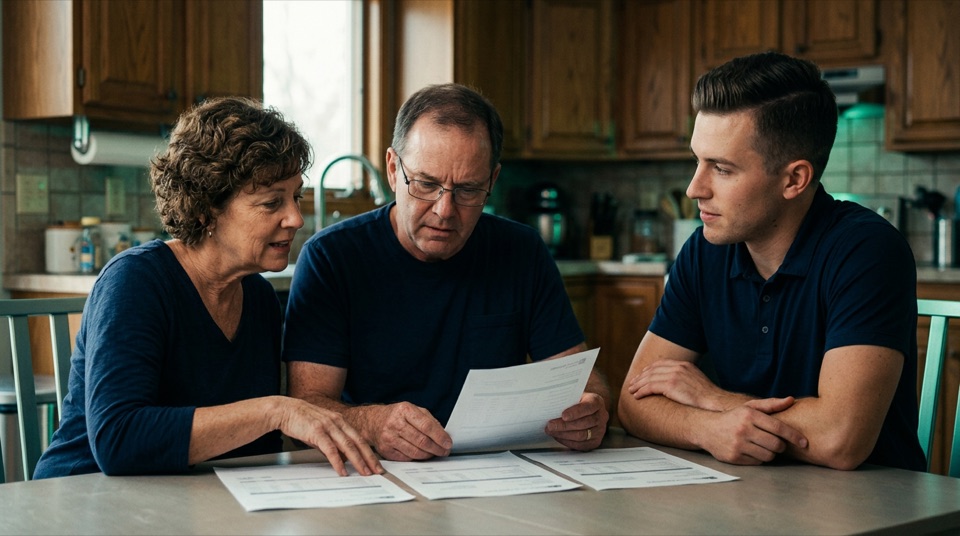
Your rep climbs down, spreads the photos on the table, walks the homeowner through the hail bruising and the lifted shingles, and everything is going well. Then the husband says it. "This all makes sense. We just want to get a couple more quotes before we sign anything." The rep nods, says that is smart, and leaves a folder. That job is gone. Not always, but most of the time, and you know it.
It is the most predictable sentence in roofing. Homeowners have been told by every consumer article and every relative to get three bids. They are not rejecting your rep. They are following advice. Which means the objection is not a sign the rep did anything wrong. It is a step in the sale that the rep has to know how to walk through, the same way they know how to read a slope.
The problem is that most roofing reps have never practiced it. They have heard it hundreds of times and improvised hundreds of times. Some days the improvisation lands. Most days it does not. On an insurance job that is a full roof, a paid lead, and an adjuster meeting your company will not attend.
Why the wrong responses lose the job
There are three common responses and all three lose. The first is to fold: "No problem, call us when you are ready." The homeowner never calls. The second is to argue: "Other companies will just lowball you." The homeowner hears a salesman getting defensive and digs in. The third is to discount: "If you sign today I can knock off five hundred." On an insurance claim that makes no sense and the homeowner knows it, and on a retail job it teaches them your price was soft.
Each of those responses treats the objection as the end of the conversation. It is the middle. The homeowner has just told you exactly what they are worried about: making a bad choice. A rep who understands that stops selling the roof and starts helping the homeowner make the choice well, which happens to be a choice your company should win.
- Folding: the homeowner never calls back
- Arguing: the homeowner digs in
- Discounting: the homeowner learns your price was soft
The structure that works
Step one, agree. "You should compare. This is a big decision and you should feel good about it." That removes the tension. The homeowner expected pushback and got agreement. Step two, ask what they plan to compare. Most homeowners have not thought about it. They assume price. Let them say so.
Step three, reframe. On an insurance claim, the carrier's scope and pricing largely set what the job pays. Three companies will land near the same number because the number is not theirs to set. So the comparison is not price. It is who will meet the adjuster on the roof, who will handle the supplement when the adjuster misses the drip edge, who installs it, and who is still in business when the warranty matters. Step four, show what your company does on each of those points that the others may not. Be specific and be honest.
Step five, ask again, with a true reason to decide today. Not a fake discount. A real one: the adjuster meeting needs to be scheduled and the company that schedules it is the one that represents the homeowner on the roof. Or the crew calendar for the next two weeks. Or the material lead time before the next storm. Whatever is true in your company this week. Then stop talking.
- Agree that comparing is smart
- Ask what they plan to compare
- Reframe: the carrier sets the price, the company is the choice
- Show what your company handles that others may not
- Ask again with a true reason to decide today
Retail jobs need a different reframe
On a retail job with no claim, the carrier is not setting the price, so step three changes. The reframe is about what is in the number. Three retail quotes are almost never for the same roof: different underlayment, different ventilation, different flashing, different crews, different warranty. A rep should walk the homeowner through what to look for on the other two quotes so that yours is the one they measure the others against.
That is a confident move and it works because it is useful. The homeowner now has a checklist you wrote. When the cheaper quote comes in without ice-and-water shield or with a subcontracted crew, they see it. The follow-up call three days later is not a chase. It is "did the other quotes include the items on the list."
Drill it until it is automatic, then check the real table
Knowing the structure is not the same as having the words under pressure at seven at night with a tired spouse across the table. The words have to be said out loud, repeatedly, against someone who pushes back. Every rep should run the three-quotes objection against a simulated homeowner daily during the month before storm season, and get scored each time.
In Revenue OS the Customer AI plays the homeowner by text or live voice at 3 difficulty levels, and scores the run in about 60 seconds on script adherence, objection handling, close attempt, energy and tone, and follow-up setup. A 70 clears. The easy persona says it once and accepts a good answer. The hard one has two quotes already, a brother-in-law who roofs, and a spouse who wants to wait until spring.
Then check whether the structure shows up on real appointments. With the homeowner's consent, the rep records the appointment from their phone and it is scored against your process. You jump to the timestamped moment where the homeowner said "a couple more quotes" and hear what your rep actually did. If they folded, the redo is a role play against the same words the homeowner used, due 6pm the next business day. That is how a comeback becomes a habit.
What to do this week
Write your version of the five steps in your company's words, one page. Include the true reasons to decide today that apply this month. Have every rep run it out loud tomorrow morning against a homeowner who says "we want to get a few more quotes," three times, and share the scores. You will see in one morning who has the words and who is improvising.
Then make it daily until the season. When the storm comes and the homeowner says it at every second table, your reps will be the only ones in the market who are not surprised. That is how a crew breaks its revenue record on the same lead volume.
The short version
- The three-quotes objection is a step in every roofing sale, not a rejection, and it is entirely predictable.
- Folding, arguing, and discounting all lose. Agree, ask, reframe, show, and ask again.
- On insurance jobs the carrier sets the price so the choice is who handles the claim; on retail jobs the reframe is what is in the number.
- Drill the structure daily against a simulated homeowner and check real appointments for the moment it was used or skipped.
Questions owners ask
What should a roofing rep say when the homeowner wants three quotes?⌄
Agree that comparing is smart, ask what they plan to compare, and reframe. On an insurance claim the carrier's scope largely sets the price, so the real comparison is who meets the adjuster, handles supplements, and installs the roof. Show what your company does on those points, then ask for the agreement again with a true reason to decide today.
Should roofing reps offer a discount to stop the homeowner from shopping?⌄
No. On an insurance job a discount makes no sense because the carrier sets the number, and the homeowner knows it. On a retail job it teaches them the price was soft and invites more negotiation. A true reason to decide today, like scheduling the adjuster meeting or the crew calendar, works better and costs nothing.
How do I know if my reps are actually handling the objection?⌄
Hear the real appointment. With the homeowner's consent, reps record from their phone and the conversation is scored against your process, with the worst moment timestamped. You jump to the point where the homeowner asked for more quotes and hear the response. A weak response becomes a practice redo against the same words the next day.
See how the system runs in Roofing & Exteriors.
Revenue OS for Roofing & ExteriorsYour best month ever, and the plan to beat it.
Break Your Revenue Record