
The retail appointment that turns into a free inspection
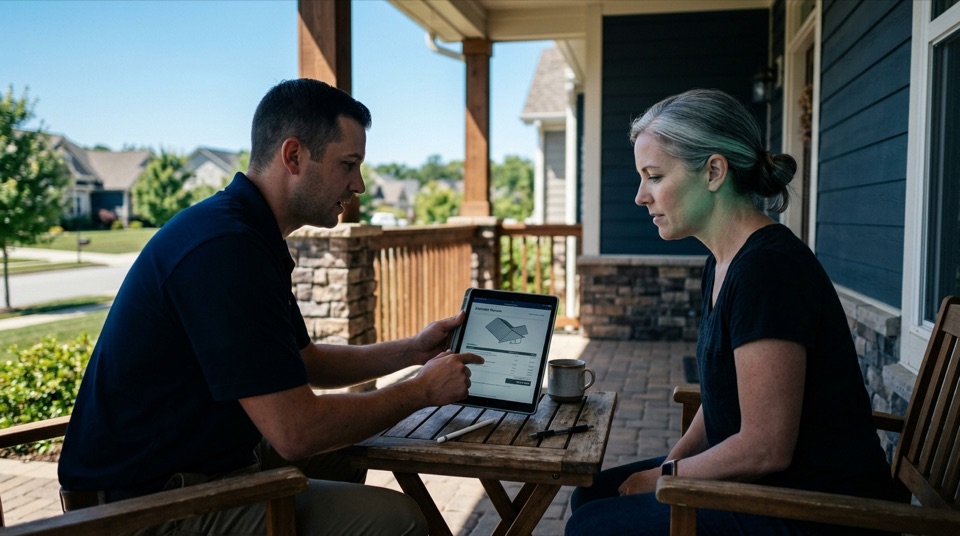
It is a dry summer. The phones are quiet. The lead that came in is a homeowner with a twenty-year-old roof and a stain on the bedroom ceiling. Your rep gets on the roof, takes good photos, comes down, and lays out a price. The homeowner goes pale. "That is a lot more than I thought." The rep offers to send a couple of options by email. The homeowner thanks him for the thorough look. Three weeks later a cheaper crew is on the roof and your photos are in the homeowner's inbox.
That is the retail leak. No storm means no claim, no carrier setting the number, no deadline. The homeowner has all the time in the world and every reason to shop. If the rep does not give them a reason to decide, the appointment becomes an inspection report the homeowner uses to negotiate with someone else.
The retail jobs also matter more than they feel like they do. They are the work that keeps crews busy between storms and they carry the margin the insurance jobs do not. A company that only knows how to sell hail is a company that lays people off every quiet year.
Price is a presentation, not a number
Most roofing reps present retail price the same way: they say the number and go quiet. The silence is not confidence. It is hoping. A homeowner who hears a number with nothing around it compares it to the number in their head, and the number in their head came from a neighbor or a guess.
The price has to arrive inside a structure. First the condition of the roof in plain terms and photos, so the homeowner agrees a new roof is the right call before any number is spoken. Then what is in the job: the underlayment, the ventilation, the flashing, the crew, the cleanup, the warranty. Then two or three options built from those components so the homeowner is choosing between versions of your job instead of choosing between you and nobody. Then the number for each, said once, clearly, with the recommendation.
Train reps to stop discounting at the flinch. A rep who drops the price the moment the homeowner reacts teaches the homeowner that the first number was padded, and the homeowner will keep pushing until the rep hits bottom. The answer to "that is more than I thought" is a question: what were they expecting, and what did that number include? Almost always the homeowner was picturing a smaller job. Month three of the Sales Academy in Revenue OS covers ticket and pricing for exactly this reason, after objections and follow-up, because a rep who cannot handle the flinch cannot hold a retail ticket.
- Agree on the condition before any number
- Show what is in the job, component by component
- Present two or three options, then recommend one
- Say the number once and ask a question at the flinch
The financing conversation without the stall
On a retail roof, "can you finance it" is not an objection. It is the homeowner telling you they want the roof and need a way to pay for it. Reps treat it like a stall because they are uncomfortable with it. They mumble something about a partner, promise to send a link, and leave. The link goes out. The homeowner never opens it.
Make financing a step in every retail presentation, offered before the homeowner asks. The rep explains that most homeowners spread the cost, walks them through how the application works, and helps them do it at the table if they want to. The point is to move the decision from "can I afford a roof" to "which option fits the monthly budget," and to do it while the rep is still in the room.
Never let a rep quote rates or terms from memory. Those change and a wrong number said at a kitchen table becomes a trust problem later. The rep's job is to explain the process, set the expectation that the approved terms come from the lender, and keep the homeowner moving. Practice the words so the rep can say them in a calm voice without reading. The objection to drill is "we do not want to take on a payment," and the answer is a conversation about what the leak is costing them now and what the roof would cost next year.
A true reason to decide today
Without a storm, the rep has to supply the reason. That does not mean a fake discount that expires at midnight. Homeowners have seen that and it makes them trust the rep less. It means whatever is true in your company this month: the crew calendar for the next two weeks, the material lead time, the weather window before fall, the fact that the leak on the bedroom ceiling gets worse with every rain.
The rep needs a short list of those reasons, written down, updated every month by the owner. And the rep needs to have said the ask out loud enough times that it comes out naturally. "Which of the three makes the most sense for you" is a closing question. "Let me know what you decide" is a free inspection.
This is where practice matters. In Revenue OS the Customer AI plays the retail homeowner by text or live voice, across 5 personas plus custom, at 3 difficulty levels, and scores the run in about 60 seconds on script adherence, objection handling, close attempt, energy and tone, and follow-up setup at 20 points each. A 70 clears. The hard persona flinches at the price, asks about payments, and says a brother-in-law can do it cheaper. A rep who can hold that persona can hold a real table on a dry Tuesday.
Check the real table, then follow up like the job is alive
Ask a rep how the retail appointment went and you will hear "they are thinking about it." Hear the appointment instead. With the homeowner's consent, the rep records from their phone and the conversation is scored on six skills, including price presentation and close attempt, plus your own process at 60% weight. The worst moment is timestamped. You jump to the price and hear whether it arrived inside a structure or was dropped on the table and left there. A score under 80 becomes a redo due 6pm the next business day, run against an AI homeowner seeded with the real homeowner's words.
Recording is initiated by your company, which owns consent including in all-party consent states. Audio is deleted 90 days after upload and no voiceprints are created. Have the rep say it plainly at the door.
Then follow up as if the job is still open, because it is. 80% of sales are made between the 5th and 12th follow-up attempt, and 48% of salespeople never follow up at all (from the Million Dollar Follow-Up course). Retail homeowners take longer than storm homeowners, and a rep with a useful reason to reach out every few days, the photos, the option sheet, a note before the next rain, is the one still in the room when they decide. Sell the dry season well and the storm season stops being the only thing standing between your company and a revenue record.
The short version
- Retail roofing appointments turn into free inspections when the rep presents a number with nothing around it and leaves without an ask.
- Price has to arrive inside a structure: condition, components, options, one clear number, and a question at the flinch.
- Financing is a step to offer before the homeowner asks; the rep explains the process and never quotes terms from memory.
- Supply a true reason to decide today, drill it against a hard retail persona, and check the recorded table for whether it happened.
Questions owners ask
How should a roofing rep present price on a retail job?⌄
Agree on the roof's condition first, then walk through what is in the job component by component, then offer two or three options built from those components with a recommendation. Say the number once. When the homeowner flinches, ask what they were expecting and what that number included. Do not discount at the flinch. It teaches the homeowner the first price was padded.
What should reps say when a homeowner asks about financing a roof?⌄
Treat it as a step, not a stall. Explain that most homeowners spread the cost, walk them through how the application works, and offer to help at the table. Never quote rates or terms from memory. Set the expectation that approved terms come from the lender, then move the conversation to which option fits the monthly budget.
How do I keep retail appointments from becoming free inspections?⌄
Require an ask at every table, backed by a true reason to decide this month that the owner updates regularly. Drill the ask and the price flinch daily against a simulated homeowner until reps clear a bar. Then record real appointments with consent and score them, so a rep who left without asking gets a redo the next day instead of a note that says thinking about it.
See how the system runs in Roofing & Exteriors.
Revenue OS for Roofing & ExteriorsYour best month ever, and the plan to beat it.
Break Your Revenue Record