
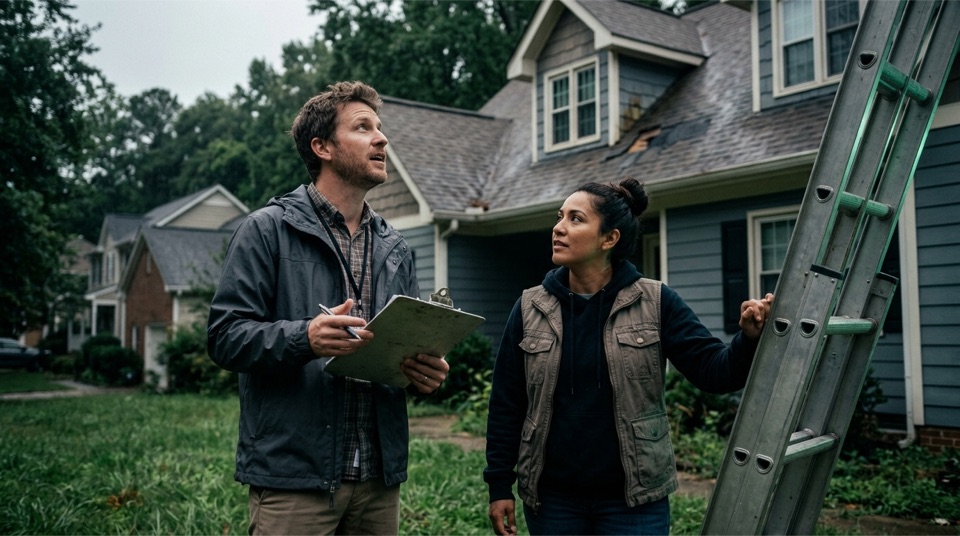
The homeowner is more afraid of the claim than the roof
Your rep has the photos. The damage is real. The homeowner is nodding. Then the wife asks, "Will our rates go up if we file?" and the rep says "probably not" in a voice that says he is not sure. Or the husband asks what the deductible means for the check, and the rep starts a sentence about recoverable depreciation and loses him. Five minutes later the homeowner says they want to call their agent first. The job stalls for three weeks and dies.
Homeowners have heard stories. Denied claims, dropped policies, contractors who took the first check and disappeared. They are not evaluating your rep on roofing knowledge. They are evaluating whether this person can walk them through something they are afraid of. A rep who explains the process calmly and correctly is worth more to them than a rep with a better shingle, and they will sign with that rep even if it is not yours.
Most reps cannot do it. Not because they are not smart, but because nobody ever made them say the whole thing out loud from start to finish, in homeowner language, and then asked the hard questions back. They know the process. They cannot teach it.
The walkthrough is a step in the sale, not a Q&A
Treat the insurance explanation as a step your process requires on every claim appointment, delivered before the homeowner has to ask. Reps who wait for questions end up on defense. Reps who lead with the walkthrough are in control of the table.
The walkthrough has a fixed shape. What happens when the homeowner files. What the adjuster does and when. What the first check covers and what the deductible means in plain terms. What a supplement is and why it matters. What the second check is. What your company handles at each of those points and what the homeowner has to do, which is usually very little. Write it in your words, on one page, with the exact phrases you want used for the deductible and the rate question.
On the rate question, train reps to say what is true and nothing more: how claims are treated varies by carrier and policy, the agent can confirm, and here is what most homeowners in this neighborhood experienced after the storm. A rep who does not know should say so and offer to help the homeowner ask. Confidence comes from having a clean answer, and a clean answer can be "here is how to find out."
- Filing and what happens next
- The adjuster visit and what it decides
- The first check and the deductible, in plain words
- Supplements and the second check
- What your company handles and what the homeowner does
The adjuster meeting is where your company earns its fee
The second fumble happens on the roof. The adjuster shows up, your rep is not there or is there but says nothing, and the scope comes back short. Or the rep is there and argues with the adjuster in front of the homeowner, and the homeowner decides the whole thing is a fight they did not sign up for.
Train the adjuster meeting as its own skill. The rep is on the roof with the adjuster, photos in hand, pointing out damage professionally and letting the adjuster do the job. Before the meeting, the rep has set the homeowner's expectation: this meeting is where the company represents them, and the reason to sign before it is so the company is allowed to be there. Reps who skip that setup lose the job after the adjuster leaves, when the homeowner decides they can handle the rest themselves.
Product knowledge matters here. A rep who can name the components on the roof and explain why a missed item matters to the homeowner, not to the contractor, is credible with both the adjuster and the family. That is teachable in a week and it changes the scope on every job.
Drill the questions homeowners actually ask
The questions are finite. "Will my rates go up?" "Why do I have to pay the deductible?" "What if the adjuster denies it?" "Why should I sign before the adjuster comes?" "My agent said to wait." "Can you just waive the deductible?" Every one of those has a clean, honest answer, and every rep should have said each answer out loud dozens of times before a homeowner asks it.
That is what a simulated homeowner is for. In Revenue OS, custom personas can be built for your market, so a rep can face the nervous homeowner whose neighbor got denied, or the spouse who read something online about rate increases, at three difficulty levels, and get scored in about 60 seconds on five criteria with a coach's note. Practice the deductible question on a Tuesday morning, not at a real table with a real claim on the line.
Include the deductible-waiver question on purpose. Reps get asked to eat it constantly, and a rep with no practiced answer either says yes and puts the company at risk or says no badly and loses the trust they just built. The answer is short and honest and it has to be automatic.
Check the real appointment, not the rep's memory
Ask a rep how the insurance conversation went and they will say fine. The only way to know is to hear it. With the homeowner's consent, the rep records the appointment from their phone. The conversation is scored on six skills and against your own process at 60% weight, and if the walkthrough is a step in your process, the score shows whether it happened. The best and worst moment are timestamped, so you jump straight to the deductible question and hear the answer.
When the answer was weak, the rep gets a redo due 6pm the next business day, against an AI homeowner seeded with the real homeowner's words. Recording is initiated by your company, which owns consent including in all-party consent states. Audio is deleted 90 days after upload and no voiceprints are made. Say it plainly at the start of the appointment and put the policy in writing.
73% of sales managers spend under 30 minutes a week coaching a rep (ATD 2025, Gong 2025). You will not listen to every appointment during a storm. You do not have to. Look at the ones that scored low on the insurance step, listen to two minutes each, and you will know which reps can explain the claim and which are winging it.
The short version
- Homeowners judge the rep on whether they can explain the claim, not on roofing knowledge, and sign with whoever can.
- Make the insurance walkthrough a required step delivered before the homeowner asks, written in your words on one page.
- Train the adjuster meeting as its own skill and set the expectation beforehand that this is where the company earns its fee.
- Drill the finite list of homeowner questions daily and check recorded appointments for whether the walkthrough happened.
Questions owners ask
What should a roofing rep say when a homeowner asks if rates will go up?⌄
Say what is true and stop. How claims affect premiums varies by carrier and policy, the homeowner's agent can confirm, and here is what most homeowners in the area experienced after this storm. A rep who does not know should say so and offer to help the homeowner ask. A calm, honest answer builds more trust than a confident guess that turns out wrong.
Should the roofing rep attend the adjuster meeting?⌄
Yes, on every claim. The rep should be on the roof with photos, pointing out damage professionally and letting the adjuster do the job, not arguing. Before the meeting, the rep should have told the homeowner this is where the company represents them, which is also the honest reason to sign before the adjuster comes.
How do I train reps on the insurance process without a classroom?⌄
Write the walkthrough on one page in your words, then have reps say it out loud daily against a simulated homeowner who asks the deductible, rate, and waiver questions. Score each run. Then record real appointments with consent and check whether the walkthrough happened. Weak answers become a practice redo the next day.
See how the system runs in Roofing & Exteriors.
Revenue OS for Roofing & ExteriorsYour best month ever, and the plan to beat it.
Break Your Revenue Record